Straße & Platz Landmark
Palmaille – Dänische Klassik über der ElbeWhatsAppE-MailPalmaille
Dänische Klassik über der Elbe
Palmaille – Danish classicism above the Elbe
History & Significance
Laid out in 1638 as a level playing lane for the ball-and-mallet game palla a maglio (French paille-maille, English pall-mall), the Palmaille is one of Altona’s oldest thoroughfares. Originally lined with hundreds of linden trees, it soon became the address for merchant families as Altona—then under the Danish crown—was fostered as a confident rival to Hamburg.
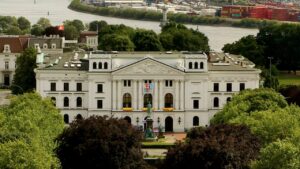
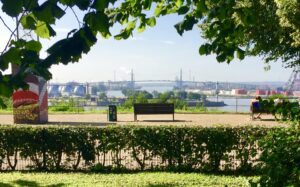
What makes Palmaille special is its Neoclassical ensemble. Master builder Christian Frederik Hansen (later joined by his nephew) created a remarkably cohesive streetscape—often cited as one of Northern Europe’s most complete Neoclassical urban ensembles. Despite wartime damage, façades were reconstructed from original drawings. Just a short stroll south, the Altonaer Balkon opens to sweeping harbor views.
Fun Facts
In 1823, astronomer Heinrich C. Schumacher founded the Altona Observatory here; the journal Astronomische Nachrichten was edited on Palmaille and became a leading global publication. Linguistic tidbit: the modern word “mall” traces back to the same game—hence London’s Pall Mall and The Mall.
Address
Loading the map will transfer data to OpenStreetMap.